
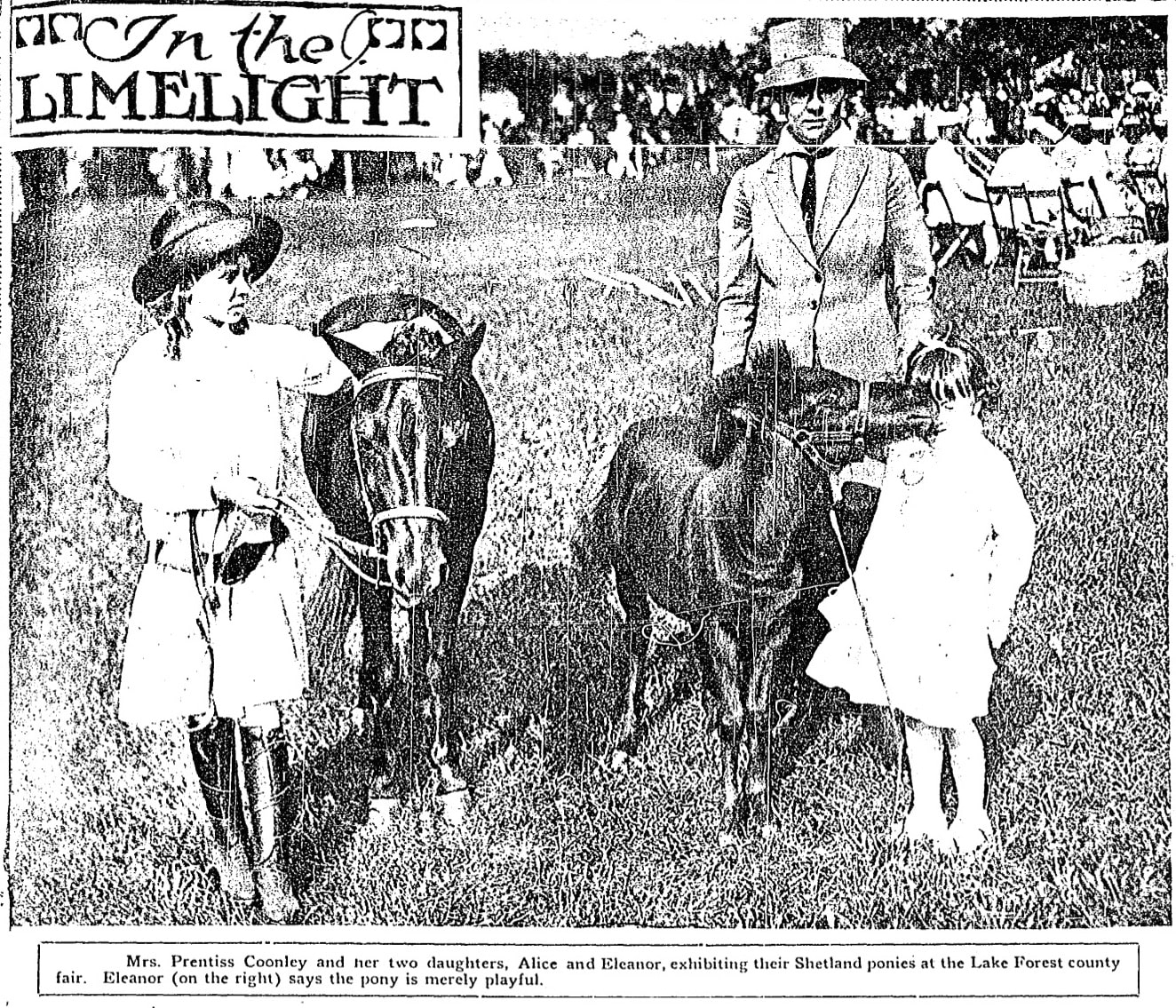
Stockbridge — For 27 years, from 1919 to 1946, Mary Lord and Prentiss Coonley supported the dream of Austen Fox Riggs to create a therapeutic community for those with psychiatric problems. The Riggs Center would help those who could pay, and Riggs Foundation would help all those who could not. The first members of the Riggs board of trustees were instrumental in lending the financial and moral support to begin the center. Mary Lord Coonley served on the first board.
When Riggs died in 1946, many assumed his clinic would also die, but Prentiss, at that time the board president, steered them out of trouble and toward solvency. Daughter Alice Coonley followed her parents, and after graduating Vassar and Barnard, and before her marriage in 1936, served as secretary to Riggs Foundation. The Coonley family’s interest and commitment were instrumental in founding and sustaining the Riggs Center. Was a servant girl the cause for the Coonley family’s interest? You decide.
An aging servant named Mary Hickey developed an unusual strategy for survival. Old, jobless, penniless, she roamed from great house to great house and slept in whichever bedroom she found unoccupied.
The houses were so big with so many bedrooms that the residents did not know she was there. They had so many servants, that if an owner caught a glimpse of her in the halls or on the grounds, they thought nothing of seeing a servant they did not recognize. Moreover, from years of prior service, Hickey knew the layouts and the routines of the mansions and contrived not to be seen. Thus, life went on for Mary Hickey for a decade.
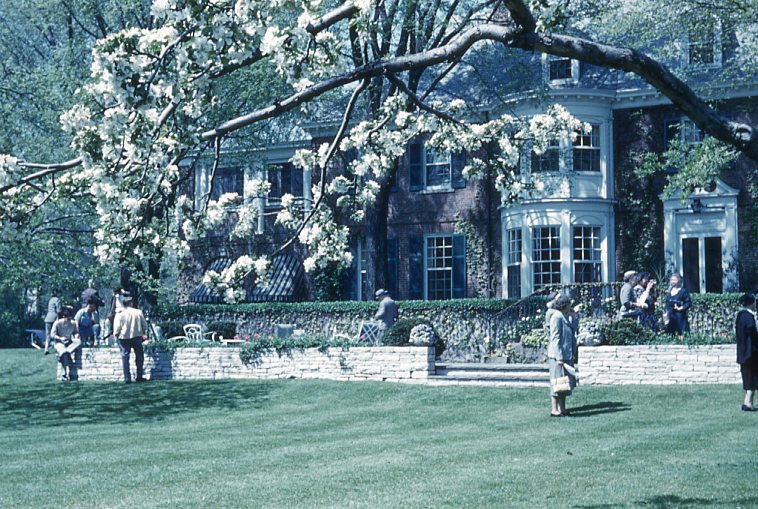
This did not happen in the great houses of Lenox or Stockbridge; it happened in Lake Forest, an Illinois enclave of the superrich, between 1905 and 1915. In 1916, Hickey ceased her peripatetic life and took up permanent residence in the attic at 980 N. Green Bay Road, Lake Forest, the mansion of Prentiss L. and Mary Lord Coonley. Feeling, one guesses, that a decent rental includes storage, Hickey requisitioned a corner of the basement for her bottles, rags and sundry treasures she collected. Furthermore, Hickey came to believe that while the rest of the house may indeed belong to the Coonley family, the attic was hers. Thus, when Prentiss Coonley discovered Hickey and ordered her out of his house, Mary ordered Coonley out of her attic. At that moment, the law may have been invited in; still, Coonley hesitated. Hickey left and he was prepared to forget the whole incident.
Hickey’s next choices were poor ones.
First, Mary Hickey kept a goat (for milk), chickens (for eggs), and a donkey and small cart (to take children for a ride and for her to ride from estate to estate). The Hickey ménage began to attract attention early in 1916. It was the animals, not Hickey, who first caused comment. As she slept, she loosed the goat and donkey in the great lawns to graze. Estate groundskeepers complained. Then indoor servants admitted that they knew that Hickey did sneak in and slept, softly exiting in the early morning hours. She exited through the kitchen as often as not and stowed a bit of food in her pockets. No one did anything. On the one hand, it may have been criminal trespass, but on the other hand, she was an old lady, poor and wretched, and those in a position to bring charges were estate owners, rich and powerful. She might arouse sympathy if they moved against her.
Second, when ousted from the Coonley house, Mary Hickey chose the great house of Coonley’s sister-in-law, Mrs. Edward L. (Helen Lord) Hasler to move into next. Mrs. Hasler was a widow. Her husband died when thrown from his polo pony, and therefore Prentiss Coonley felt Mrs. Hasler was under his protection.
Hickey hid in closets until she thought everyone was in bed and then selected a guest bedroom. One night, Hickey was discovered. When Mrs. Hasler demanded she leave and Hickey refused, Coonley stepped in to protect his sister-in-law. He finally called the Lake County sheriff.
Mary Hickey landed in the county jail. There, in anticipation of the hearing, Hickey made her third very bad decision. She threatened Coonley. She told whoever would listen that she would “get” him if it was the last thing she ever did.
The hearing took place Sept. 9, 1916. Encouraged by his wife, Coonley brought not a criminal charge, but a charge of insanity.
“An insanity hearing was the kindest course to take,” Mrs. Coonley testified.
Then Coonley testified. He opined Hickey would be better off in a sanatorium than in a penitentiary. Unfortunately, the general practitioner who interviewed Hickey testified that while she was peculiar, she was not insane. Coonley offered to hire an “alienist,” and the hearing was continued one week for Coonley’s psychiatrist to interview Mary Hickey.
During that week there was pressure exerted on Coonley not to bully and browbeat a poor old woman. He succumbed, did not hire an alienist and dropped all charges. The legal difficulties for Mary might have ended there. Unfortunately, Mary Hickey was not simply peculiar.
In December, Mary discovered that new-fanged invention: the telephone. She called the Coonley and the Hasler houses repeatedly. She placed her donkey and cart in the path of Mrs. Hasler’s automobile. On the telephone and in person, she spewed threats and invectives.
Coonley offered to relocate Mary, promised to pay for her travel and give her an allowance if she moved to “a warmer climate.” The offer was rejected and the threats continued. Finally, Hickey found the one thing to say that galvanized the police and courts, and turned all sympathy from Hickey to Coonley.
Mary threatened to kidnap and kill the Coonley’s oldest daughter, 10-year-old Alice.
At the December hearing, with Alice Coonley under 24-hour guard, an alienist testified that Hickey was a paranoiac.
“Persons of this kind are generally considered harmless,” he said, “until they take a gun and kill someone.”
Mary Hickey finally found permanent residence in the Illinois State Mental Hospital. Three years later, the Coonleys went to Stockbridge, visited Austen Fox Riggs, and began a 27-year commitment to his psychiatric center.