About Connections: Love it or hate it, history is a map. Those who hate history think it irrelevant; many who love history think it escapism. In truth, history is the clearest road map to how we got here: America in the 21st century.
They met at Erskine Park, the Westinghouse estate in Lenox, circa 1890. They were children, and as their parents socialized, they became playmates. With subsequent visits in America and England, they grew up together. A nice, civilized beginning to a lifelong friendship and marriage. However, the Gilded Age was nothing if not romantic, so another version was circulated.
A beautiful heiress and Baronet’s daughter, Violet Brocklebank was visiting the Westinghouse plant when she saw a very handsome young man, apparently a machinist. Putting aside the socioeconomic differences, she welcomed the young laborer’s advances. Only after she accepted his proposal of marriage did he tell her he was George Westinghouse III. Piffle, but romantic piffle.
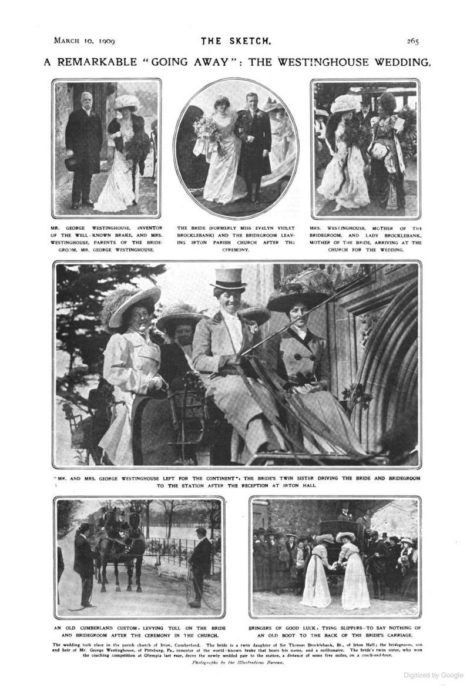
In 1908, a New York Times headline meant to amuse and perpetuate the myth read: “George Westinghouse III will Marry Miss Brocklebank When He Earns the Money.” The December wedding was postponed, but not for lack of money. George caught the flu, and the wedding was postponed until March 1909.
About that romantic tale: it was only untrue by the distance of a generation or two. George Westinghouse Sr. (1809–1890), George III’s grandfather, owned a machine shop in upstate New York that manufactured agricultural and mill machinery. He was a machinist.
He married Emaline Vedder, daughter of Dutch settlers in New York, and together they had nine children. The eighth, George Westinghouse Jr., was born Oct. 6, 1846. As a teen, George Jr. worked in his father’s business. He too was a machinist.
George Jr. had a mind for invention. At age 15, George produced a small rotary engine. Progress on the invention was interrupted by his stint in the Civil War. When he returned to the Westinghouse machine shop, he completed work on his rotary engine and received a patent in 1865.
After a train accident, passenger George Jr. waited and watched. He discovered a better way to get the train cars back on the tracks. His father refused to fund production because it was beyond the scope of his shop. That is how George Jr. got from New York to Pittsburgh. Two businessmen funded production and they went to where the steel was to produce the car-replacers and reversible steel frogs. George Jr. was the grand old age of 20.
One year later, George Jr., more than a machinist, met Marguerite Erskine Walker from Roxbury, New York. He was instantly attracted and provided her with a list of people who would vouch for his character. Soon after, the couple was engaged. They married in 1867.
By age 25, George Jr. had founded Westinghouse Air Brake Company. His work to improve railroad signaling devices led to the founding of Union Switch and Signal in 1881. His belief in the alternating current method of electrical transmission led to the founding of the Westinghouse Electric Company in 1886. During his life, he was awarded 361 patents and founded 61 companies.
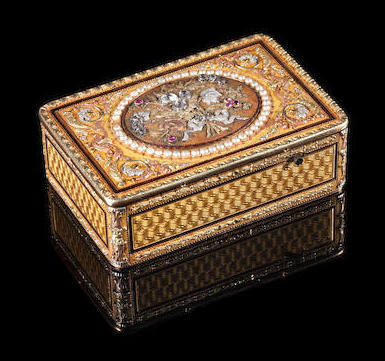
By 1888, the Pittsburgh Social Mirror reported: “Mrs. George Westinghouse, Jr., of Homewood, lives in greater style, entertains more splendidly, wears more gorgeous, varied, elegant toilets, and has more and finer diamonds than any woman in Pittsburgh. Her table appointments are simply superb, the entire service being of solid silver and gold (whose cost it would be idle to attempt to guess), and the cut glass, Sevres, Dresden, and other fine porcelains are worth a small fortune.”
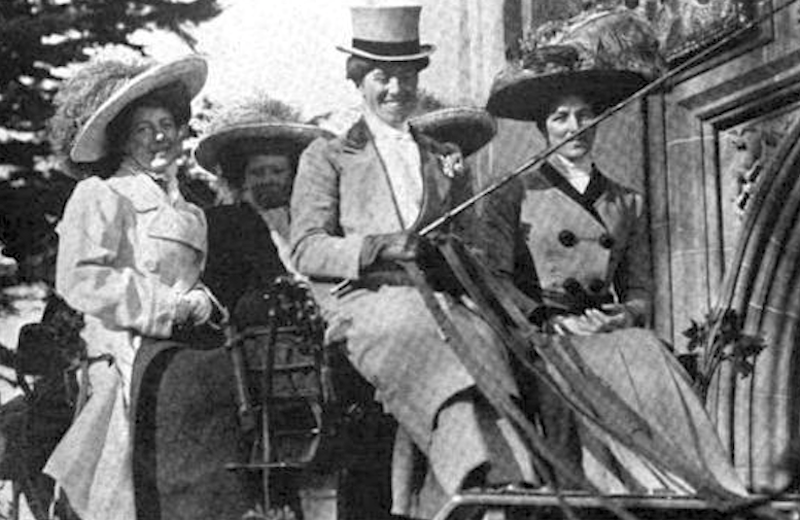
OK, so the son of a machinist and the grandson of a machinist was not a machinist. He was the only son and heir-apparent to a vast fortune. He married his childhood friend, a member of peerage in Cumberland, England, in 1909. Having met at Erskine Park, a Berkshire Cottage of equal beauty and grandeur to all the other Westinghouse possessions, George III and Violet were poised to have as happy and successful a marriage as his parents. Not the romantic cocktail to quench the thirst of the masses. Still, it’s a pretty good tale.
As a historian, I always wondered how the invention lived on under the dictum: never let the truth get in the way of a good story. Especially when the truth was very often just as good a tale as the fiction. I concluded that all is politics. The invention usually made a political point or proved one. Now that you’ve heard the two stories side by side, which do you prefer?