I have tried well over one hundred cases throughout the nation and in foreign jurisdictions. I have seen procedures which encompass our law (English based), to Continental law (no presumption of innocence), to Asian nations (often an amalgam of other systems).
I have been involved in corrupt trials — with corrupt judges, occasionally with corrupt juries, and certainly in situations where there was no chance my clients could ever get justice. But one thing is certain in every American trial: there is at least a pretense, often false, that the proceeding is designed to come to a conclusion based on the evidence and the law.
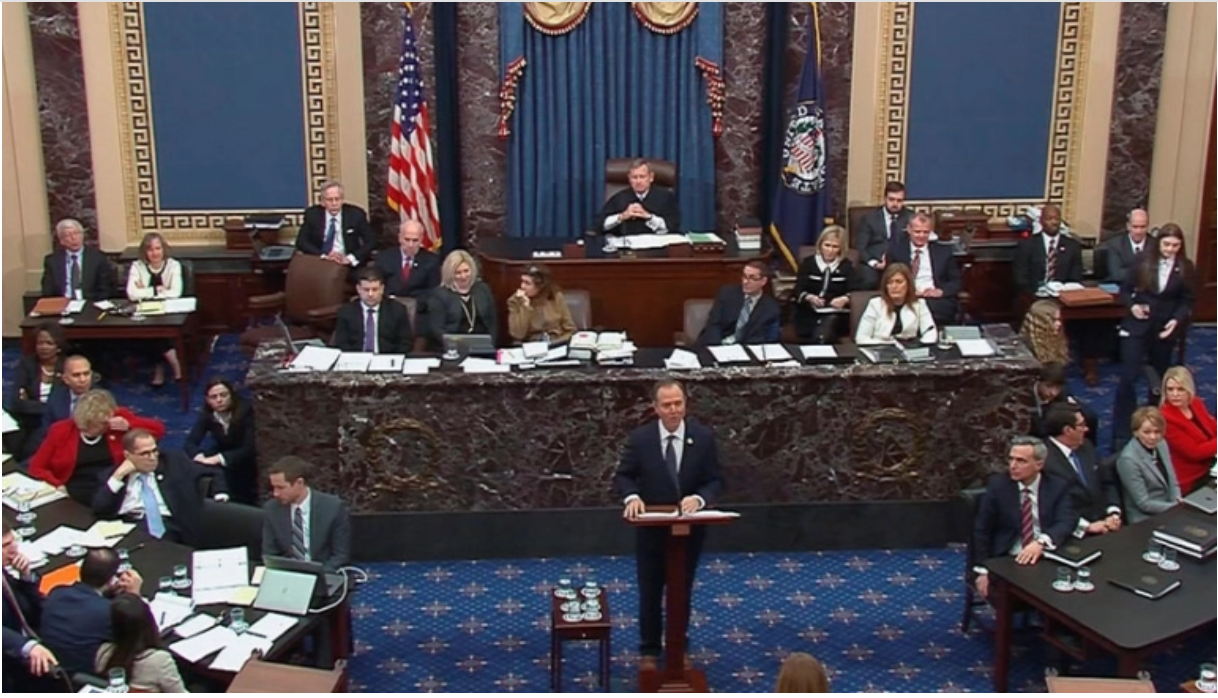
Now let’s take our newly begun impeachment trial. The prosecutors hate the defendant and have tried to get rid of him throughout the last four years. They had grounds the last time they brought charges, but the verdict was pre-ordained, as it is now. The man incited a mob to storm the capital and fed the nation a completely false narrative for months. As the managers said in their openings, if this isn’t impeachable conduct, what is?
His telephone call to the Georgia election officials is the most blatant shakedown since “The Godfather” movies and is a violation of state and federal election statutes. (Remember, impeachment and a conviction don’t even require a violation of criminal law). That conversation wonderfully shows the intent behind the January 6 rally and his call to arms. Once he couldn’t get anyone to give him the votes in Georgia or anywhere else, he believed he had to stop the process in the Congress.
The jury this time is virtually the same. There is no doubt of the outcome because almost all of the Republican jurors have already violated their oaths to try the case fairly and have announced that they will vote not to convict. They began their corrupt bargain with the 45th President when they voted to dismiss the case because, in their opinion, it is unconstitutional since the defendant is out of office and therefore cannot be tried. This is blatantly contra to the Constitution which has two prongs of liability for a defendant: removal from office and the possible bar from future government service. And there is precedent: a prior secretary of war was removed after he resigned in disgrace. This interpretation is the opinion of virtually every Constitutional law expert.
Why are we going through this dance when the jury is biased and rigged for acquittal? Could it be that if we don’t show the conduct of our 45th president in all its sordid glory we could give heart to future dictator wannabes? Perhaps, but there is little doubt that the investigations which are continuing in Washington, Atlanta and other jurisdictions will have time to dig much deeper to show if there was a seditious conspiracy underlying Trump’s conduct. If so, Trump will have criminal liability.
I will give you a pretty good guess why January 6 happened. Trump was told by his intimate conspiracy actors, including the pillow guy, Flynn, and Giuliani and his other crazed lawyers, that the only chance he had to stay in power (after martial law was thankfully dismissed as a possibility) was to make sure the electors’ certifications were rejected and not approved by the Congress. This advice was dead wrong, but you’re not talking about a bunch of Cardozos here.
To stop the vote on January 6, the day the electors’ certifications had to be adopted, Trump called for the armed invasion of the Capital. Once the smoke of battle had cleared, the craven Republican legislators still attempted to halt the process in order to investigate supposed voter fraud. This was after more than 60 state and federal cases were tossed out throughout the country and 90 judges, some Trump appointees, found no fraud.
So why are we doing this? My suggestion is we have to, if not as a caution for the future Trumps but as a tribute to those who died, and to show the world that this stain on our democracy will not stand. If the Republicans in the Senate want to be true Americans, they can try this case like an honest jury. What are the chances of that?