Most days are uneventful in the circumscribed world I now inhabit. It is one that normally consists of a rent stabilized apartment, a nearby café, numerous appointments with doctors, rare visits to the local park when spring-like weather momentarily appears, and taking a cab to my favorite art theaters for new films. At the same time, tumultuous events continue to take place in the public world, where moments of tranquility are rare. I read the newspapers and watch TV news closely, so I don’t hide from the violence and inequity that exists outside my daily range of perception. The New York Times is filled with news of the war in Iran where a U.S. Navy destroyer attacked and seized an Iranian cargo ship that defied an American blockade of Iran’s ports. Other news in the past few days highlighted a “massive” Russian nighttime drone strike on Chernihiv in northern Ukraine that killed a 16-year-old boy and wounded four others. Just a small piece of the endless war that the murderous kleptocrat Putin wages in Ukraine.
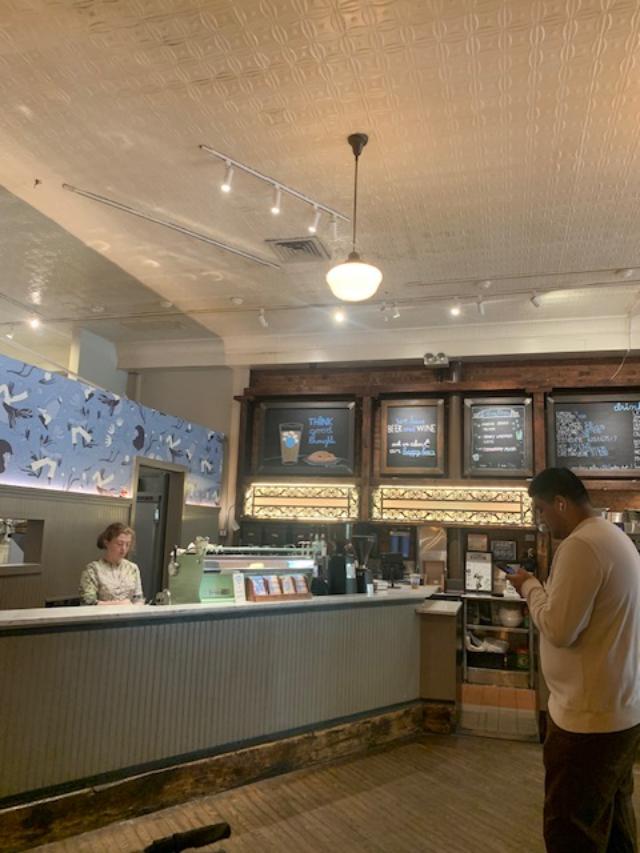
I can also scan stories about a continuing civil war in Sudan and Israel’s attack on Hezbollah bases embedded in southern Lebanese villages. There is no limit to the destruction that lies churning outside my purview, while I quietly sit drinking my morning latte. However, it has never been emotionally possible for me to be placid for any length of time. Even at my advanced age, I still want to be stimulated by life. Consequently, I resurrect memories, delving for some greater meaning that has eluded me.
I have begun to understand by reading the words of a novelist/memoirist friend more about that act. He wrote, “I learned that to remember is, at least in part, to imagine, and that the act of transposing memory into written words is a creative act that transforms the memory itself.”
I am never certain how much of my memories I have altered or transformed. But some remain poignant or filled with meaning. I try to remember them whole, but with some clear, unconscious modification. I recall a hot spring day when I took a very long walk with a close friend, a tense physics student, along the then-fetid Bronx River. (He later committed suicide, and I attended his funeral bursting into tears—it is a vivid memory that I still don’t fully understand.) As he and I were walking and talking about novels that meant something to us, we saw two girls I knew by sight from the neighborhood. In our awkward, self-conscious manner, we tried to pick them up. Of course, the half-hearted attempt failed, and we continued walking and talking chastened by our failure. I remember that day because of my close friend, the setting (the edge of the Bronx Zoo), and the feeling of failure to achieve what I thought so many other boys did naturally.
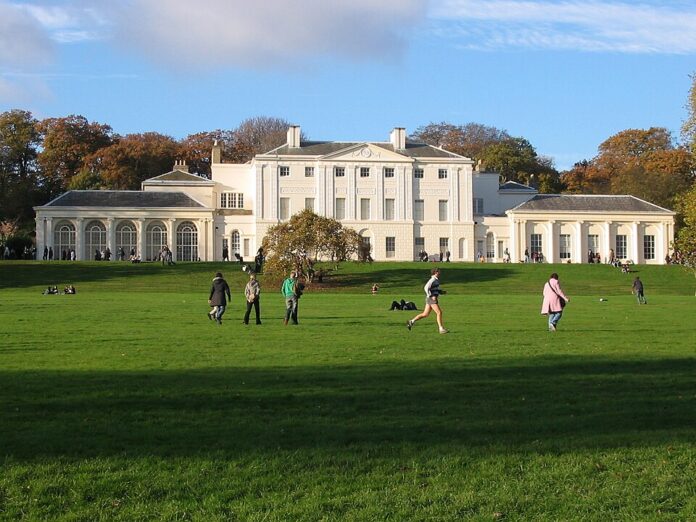
Some powerful but very different memories occurred when I was already teaching. My wife and I were in London for the first time, and we met a New York journalist friend who took us through Hampstead Heath to see a stately home, on the neighborhood’s northern boundary: Kenwood. Looking from a distance, its whiteness gleamed, and I felt transported into some magical realm. There were dense woods, a large pond, a flower garden of rhododendrons and azaleas, and green meadows adjacent. We went back many times over the years to Kenwood, but it was never quite as magical. Still, walking and eating breakfast there always exhilarated me—it was a beautiful spot.
Obviously, it is hard to imagine a utopia that works or does not turn into a dystopia—reality always intrudes, and no state can avoid the collective imperfections of human nature.
Writing of utopia, I once had a dream about the leader of my experimental education program, who was older than the rest of the group’s faculty. He was urbane, a dreamer, charismatic, temperamental but also easily hurt and quick to drop things when they did not go his way. Still, I dreamt than he was leading me up steep stairs to some educational/political utopia, but when I reached the top, there was only an abyss. A very literal dream, since our imaginative program dissolved in chaos after two years.
Clearly, memories are insufficient to make life meaningful, but I love the act of remembering. So, I go on watching Trump threaten and rage—a dangerous clown with the capacity to destroy. But I have memories and passions and a sensitive wife to provide some balance.