
I am trying to capture aspects of my January days by writing about a stream of modest activities that I engage in. It has been raining steadily this morning, and it is unpleasantly chilly when I go out for coffee to my local café. After reading The New York Times, I return home, ploughing through puddles with my walker, past the homeless man who sleeps under dirty canvas on top of a vent, and beneath the city’s ubiquitous building sheds. I have exchanged only a few cursory, polite words with people at the café, with much of the morning spent in silence. However, when I get home, I speak to an old friend on the phone and find that, at this time of our lives, serious medical issues have disturbingly begun to dominate our conversation. The talk always makes me even more anxious and pessimistic about the future than I usually am.
Thinking dark thoughts moves me to recall that the day before my wife was intently watching Claude Lanzmann’s nine-and-a-half-hour masterpiece “Shoah” (1985) on Turner Classic Movies. The film is based on hundreds of hours of often heart-rending testimony from survivors of the concentration camps and odiously self-justifying testimony from former Nazis whom he secretly filmed, as well as Polish villagers living near the camps of Treblinka, Chelmno, Auschwitz, and Birkenau, most of whom rarely hide their antisemitic feelings. The film is unsentimental, extremely intelligent, and all encompassing—both as a work of art and as a brilliantly cogent document of historical horror. I had seen much of the film in the past, so I just watched snatches of it with my wife. It may have a few too many unrewarding long takes, but it conveys much of the essence of the Jewish Holocaust experience. It makes me think about the crushing destruction of Gaza, which may not be genocidal, but cannot be merely dismissed as war’s collateral damage. Nonetheless, the film forces one to understand how Israelis (even those few who remain on the Left) react to Hamas’ horrendous attack, viewing Jews as innocent victims of an enemy that is impossible to forgive, and by extension feeling little sympathy for the plight of ordinary civilian Palestinians. One empathizes with their feelings, but at the same time one knows that the devastation is no answer to the violent quagmire in the midst of which they exist.
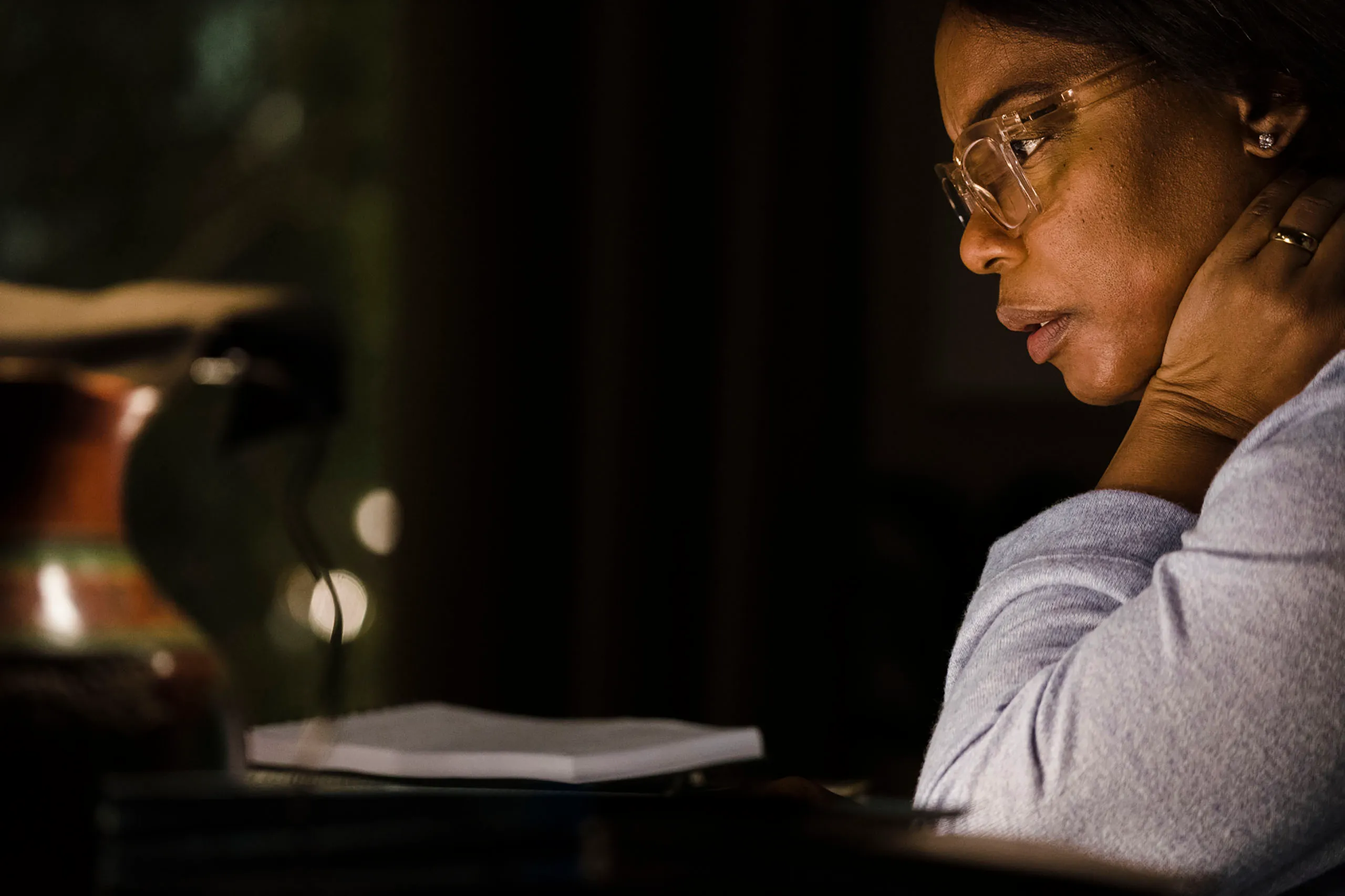
Another morning I walk to one of the many Village theaters that show art films. This time it is “Origin” (2023), directed by Ava DuVernay, who also directed “Selma” (2014). “Origin” centers on the journalist Isabel Wilkerson, the first African American woman to win a Pulitzer Prize for journalism, and on her 2020 bestseller “Caste: The Origins of Our Discontents.” The book radically challenged the concept of race in thinking about inequality and injustice and asked the reader instead to consider the notion of “caste”—a fixed social group into which an individual is born within a particular system of social stratification, like the Dalits (“Untouchables”) in India. The film is a dramatization of the book, tending to be much more interesting intellectually than it is humanly and psychologically—even despite Aunjanue Ellis’s quietly striking performance as Isabel, who also painfully sees the death of those closest to her, including her husband. In fact, the film feels often more like an awkward illustration of ideas than a complex exploration of a writer’s intellectual journey. Still, it can at moments be a moving work.
I hope to continue writing these impressionistic pieces, and in the future try to convey more of what I see wandering the city.