
I am not teaching a film course this term, so I have more time to think about the many things that obsess me, from the political to the personal to the literary. I can’t escape politics, so there is no way I am able shut my eyes to the Turkish invasion of Kurdish territory and our president’s impulsive and, in his own mind, “wise” collaboration in their brutal action and its murderous and chaotic results. It’s hard to imagine how much more damage this hopefully cornered corrupt thug and blusterer of a president can do before the 2020 election unless he’s impeached. And given the machinations of the Machiavellian McConnell and the self-interested cravenness of the Republican Senate, that will probably never happen. Leaving Trump to bellow a barrage of lies that assert impeachment is a partisan put-up job — a “kangaroo court” without a constitutional basis.
But my political analysis, though deeply felt, I never sense is sufficiently fresh and original. I just read too many political columns and magazine articles and watch too much Maddow, Hayes and MSNBC to end up avoiding unconsciously repeating much of what the pundits have already said.
Still, I do some walking (hobbling, to be more accurate), visiting the modern wing of the Metropolitan Museum of Art, because though the Hopper, Balthus and O’Keefe paintings may seem to be on the wall permanently, a Kirchner, Grosz and a Duncan Grant have been freshly hung, replacing Romare Bearden’s collages and other works. In fact, the wing keeps on shifting some of its paintings, which gives museumgoers a chance to see pieces of the immense collection that the Met has been warehousing for years. After walking through the Rockefeller wing that contains primitive art, I sit outside on chairs with an old painter friend amidst a crowd of tourists, who I assume are not there for the exhibit on abstract painting. We sit in the politically powerful and reactionary David H. Koch Plaza. (He was a museum trustee who contributed the entire $65 million cost of the project.) We are there taking pleasure in the swirl of people and sound, and talking about our past lives, for the moment feeling no guilt that we are enjoying Koch’s unholy legacy. He was a man who subsidized art institutions — while attacking unions and environmentalists — buying him, he thought, some grace before dying.
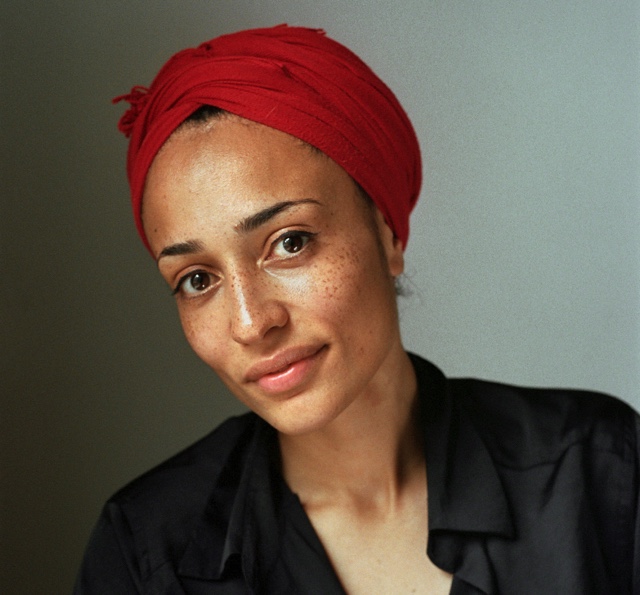
One last thing I have been thinking about was a difficult essay on fiction by Zadie Smith, the British biracial critic and novelist (my favorite novels of hers: “White Teeth” and “On Beauty”), who teaches at New York University. Smith writes in the recent New York Review of Books: “I do believe a writer’s task is to think for herself, although this task, to me, signifies not a fixed state but a continual process: thinking things afresh, each time, in each new situation. This requires not a little mental flexibility.” She has little use for the idea that we should only write about people like ourselves. It “insults her soul” and though, she feels, “it’s natural that we should fear and be suspicious of representations of us by those who are not like us,” it shouldn’t delimit what we write. She knows that we live in a time in which “writing by women, and by oppressed minorities of all kinds, has wondrously expanded the literary landscape,” but she feels the mystery of selfhood can be lost when fiction becomes aggressively polemical. She wants fiction to deal of what is unseen and ultimately unknowable about others. Smith talks directly to me, since I have always been wary of the prescriptive and predictable.
I have many other thoughts, but they will hold.