I’m back in New York after a long Berkshire summer. I have already begun to walk more, mainly to shop and get my morning coffee and bagel. The rhythm of the streets moves me, despite my stenosis, to walk a bit faster and with greater ease, even if there is nothing new to look at on the streets that have been home to me for more than half a century. On the surface, even though I pass by innumerable vacant stores (though fashionable Bleecker Street in the West Village has begun to recover), the Village seems as active as in pre-pandemic years — students, young fit couples, and tourists dominate the streets. The many outdoor dining sheds attached to the cafes and restaurants on a crowded Hudson Street create a loud buzz, and I like the sound, though it’s no longer produced by the bohemia that once existed in the Village. That was a time when people sitting in these cafes felt it imperative to carry books (e.g., Camus, Kafka, Baudelaire, and Marx) to display their intellectual interests and commitments, even if it was only for show.
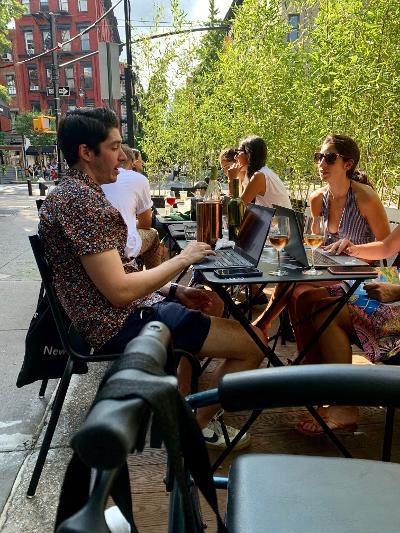
No longer, for now people sitting in cafés are on their computers, while others are intently staring into their iPhones as if mesmerized. Newspapers and books are very hard to find. My wife and I are the oldest people sitting in a café, but I’m not ready to retreat to my apartment to watch Netflix. I like watching the flow of people, though many seem alien — people with a very different consciousness or perspective on life. It doesn’t matter, I feel engaged in observing the changes that occur in the life of the city. For me it means I still care deeply about the city and life itself.
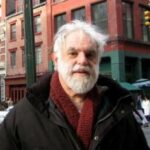
One day my wife, who is a painter, and I return to MOMA for the first time since the pandemic began. We are there for the immense Cezanne drawing show that closes on September 25. For Cézanne, “Drawing is merely the configuration of what you see,” and his practice of drawing, he believed, taught him “to see well.” It’s a stunning show, bringing together more than 250 rarely seen works in pencil and watercolor, along with key paintings. Together they reveal how, through drawing still lifes, landscapes, portraits, and interiors, Cezanne began to explore new ways of imaginatively seeing.
There’s much more about the city I feel I must write about, including crime and the precarious urban economy, but it will hold.